Why removing a distinct religious code for Native American military service members will make their needs invisible
(The Conversation) — The Pentagon recategorized Native religions as ‘other.’ A scholar of Native American and Indigenous Studies explains the implications of that change.
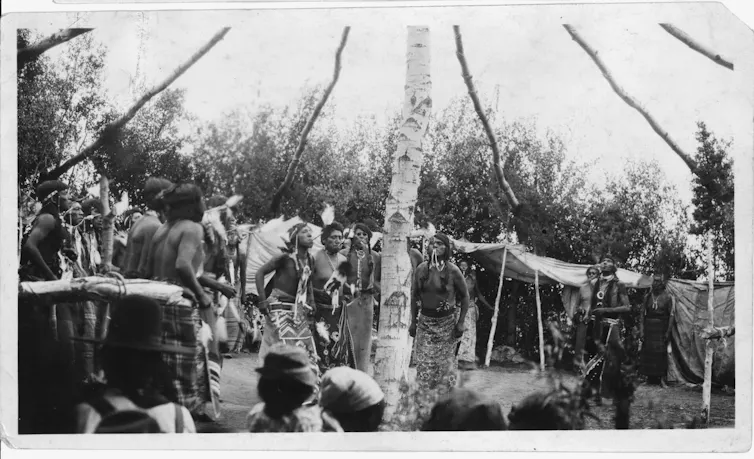
(The Conversation) — The Pentagon recategorized Native religions as ‘other.’ A scholar of Native American and Indigenous Studies explains the implicat
Read Full Story at Religion News Service →Why This Matters
Religious accommodations in the U.S. military are not merely bureaucratic checkboxes—they are lifelines for service members whose spiritual practices shape their identity, resilience, and even survival. By erasing Native religions from a distinct category, the Pentagon risks rendering invisible the very traditions that have sustained Indigenous warriors for generations, undermining the military’s stated commitment to diversity and religious freedom.
Background Context
For decades, Native American service members relied on a categorical designation that acknowledged the unique spiritual protocols tied to their identities—protocols often incompatible with mainstream military life. This recategorization follows a pattern of gradual erosion of Indigenous visibility in federal systems, where cultural specificity is often collapsed into broader, less meaningful classifications that dilute genuine recognition.
What Happens Next
The immediate consequence will likely be a surge in individual accommodation requests, as Native service members navigate a system unprepared to address their needs. Over time, this could trigger legal challenges or policy reversals if the lack of structured support leads to measurable harm—whether in morale, retention, or mental health outcomes. The Pentagon’s move may also set a precedent for how other marginalized religious groups are treated in high-stakes institutional settings.
Bigger Picture
This shift reflects a broader trend in institutional policy where cultural specificity is sacrificed for administrative simplicity, often under the guise of standardization. It mirrors long-standing struggles in education, healthcare, and law enforcement, where Indigenous identities are either homogenized or ignored. The stakes extend beyond the military; they signal how far institutional America still has to go in honoring the commitments it makes to its most vulnerable citizens.




